
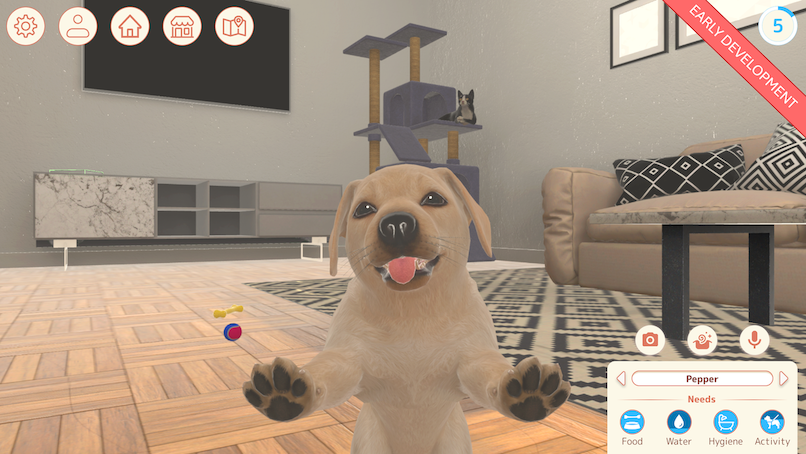
Calling a game a virtual dog and cat game is easy. Making it feel authentic for both dog lovers and cat lovers is much harder. PawFriends sits in that challenge space: one shared cozy world, two companion styles, and enough depth for long-term play without turning daily care into stress. This article looks at what that means in practical terms and how players can judge whether this mixed-species approach is genuinely working.
Table of Contents
Two Companion Fantasies in One Game
Dog-focused play and cat-focused play often emphasize different emotional rhythms. Dog players may enjoy active interaction and training flow. Cat players may care more about subtle expression, calm routines, and personality detail. Both are valid, and both should feel intentional.
A strong mixed game does not force one style to mimic the other. It keeps a shared foundation while allowing species-specific flavor to show through behavior, pacing, and interaction response.
Why Shared Systems Matter
If every species path has a separate ruleset, daily play becomes heavy and fragmented. Players spend too much time managing structure and not enough time bonding. Shared core systems make routines easier to keep.
The goal is clarity first, variation second. Keep care loops readable for everyone, then express differences through meaningful response patterns rather than unnecessary complexity.
Design Checkpoint
- Are base care actions consistent across species?
- Do dogs and cats still feel behaviorally distinct?
- Can players switch focus without friction?
- Does progression remain understandable?
Personality Depth Beyond Cosmetics
Players remember behavior more than outfits. Cosmetic customization helps identity, but long-term attachment comes from how companions react over time. If response patterns stay flat, personalization feels surface-level.
In practical terms, a modern dog-and-cat game should show personality through routine moments: timing, reaction tone, and growth cues that make each companion feel like a relationship, not a skin.
Progression Without Losing Cozy Tone
Modern players want goals, but cozy players also want emotional safety. That means progression should provide direction without becoming a permanent pressure loop. Optional challenge works. Constant urgency usually does not.
PawFriends is best when competitions, training, and social goals sit on top of a complete care routine instead of replacing it. This keeps both relaxed and goal-driven players engaged.
Guiding Principle
A cozy game can be ambitious. The key is making intensity optional and companionship central.
Care, Walks, and Customization as One Loop
The strongest pet games connect their systems. Walks feed discoveries. Discoveries support customization. Customization reinforces identity. Care gives emotional continuity between sessions.
When those systems are disconnected, the game feels like separate modules. When they are integrated, even short sessions feel meaningful because each action supports broader progress.
Social Features Without Pressure
Community systems like Paw Clubs can enrich a pet game, but only if they stay additive. Solo players should still feel complete. Social players should gain shared momentum, not mandatory stress.
Healthy social design in this genre values flexible participation, friendly goals, and contribution diversity rather than nonstop ranking pressure.
Who This Experience Is Best For
This style is ideal for players who love both dogs and cats, want one cohesive world, and prefer routine comfort with optional depth. It is also a good fit for players who want to move between solo and social play without switching products.
If that sounds like your play style, continue with Dog and Cat Game, Multiplayer Pet Game, and What Makes a Great Virtual Pet Game?.
Follow the PawFriends Journey
Join the newsletter for devlog updates, Kickstarter milestones, and important progress notes.
Join newsletter updatesFrequently Asked Questions
Can one game really satisfy both dog and cat players?
Yes, if the game has shared clarity at the system level and meaningful species-specific behavior at the interaction level.
What is the biggest design risk?
Shallow differentiation. If one species feels like a visual reskin, long-term attachment usually drops.
Do social features reduce cozy play?
Not when they are optional and additive. Cozy tone holds when solo progression remains complete.
How should I evaluate fit quickly?
Play both species paths for several sessions and compare behavior feel, progression readability, and routine comfort.