
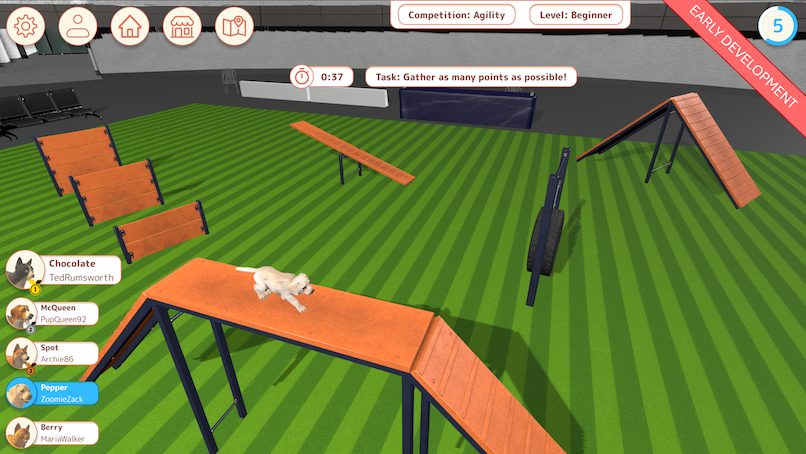
Competitions can improve a cozy pet game when they create clear goals without taking over the emotional core. In PawFriends, agility, obedience, and disc events are positioned as optional progression tracks layered on top of care and bonding. This guide explains what each event style contributes, how to train sustainably, and how to stay motivated without turning your routine into pressure-heavy play.
Table of Contents
Why Competitions Belong in Cozy Design
Competitions give direction to players who enjoy mastery and measurable progress. Without long-term goals, routine loops can feel aimless for this audience.
The design risk is overcorrection. If challenge dominates every session, cozy tone collapses. Optional depth is the right balance.
Agility: Flow and Timing
Agility tends to reward rhythm, route reading, and clean execution. It is often the best fit for players who enjoy active sessions and visible improvement loops.
The key quality marker is feedback clarity. Players should always understand what improved and what needs adjustment.
Agility Focus Points
- Consistent timing practice.
- Readable route structure.
- Short repetition loops.
- Visible confidence growth.
Obedience: Precision and Consistency
Obedience events emphasize reliability. They work well for players who enjoy steady mastery rather than high-variance outcomes.
Because obedience is closely tied to routine behavior quality, it naturally reinforces core care loops in a way that feels cohesive.
Disc Events: Accessible Skill Depth
Disc competitions are often easier to read quickly, which makes them a good bridge between casual and committed players.
They still benefit from long-term practice, especially around timing and coordination, so they can remain engaging over time.
Guiding Principle
Challenge should create motivation, not tension fatigue.
A Sustainable Training Routine
Most burnout comes from intensity spikes. A better approach is repeatable structure: two focused training sessions per week plus regular care and walk sessions.
Consistency beats bursts in companion games because progression is relational and cumulative, not only score-based.
Competition and Community
Events become more meaningful when community systems support shared preparation and celebration. That context helps newer players stay engaged and gives experienced players mentorship roles.
Healthy competition culture values improvement and teamwork, not only top placements.
Staying Competitive Without Burning Out
Use process goals alongside score goals. Track training quality, not only rank outcomes. This keeps progression grounded and sustainable.
For connected context, continue with How Paw Clubs Bring Cozy Multiplayer and Games Like Nintendogs.
Follow the PawFriends Journey
Join the newsletter for devlog updates, Kickstarter milestones, and important progress notes.
Join newsletter updatesFrequently Asked Questions
Do I need to train all three event types?
No. Most players progress better by specializing first, then expanding.
Can competitions stay optional in a cozy routine?
Yes. They should add progression depth, not replace daily care and bonding loops.
What training pattern is most sustainable?
Short, regular sessions with clear goals are usually better than intense but inconsistent blocks.
How do competitions support multiplayer?
They create shared milestones and discussion points that strengthen community momentum.