
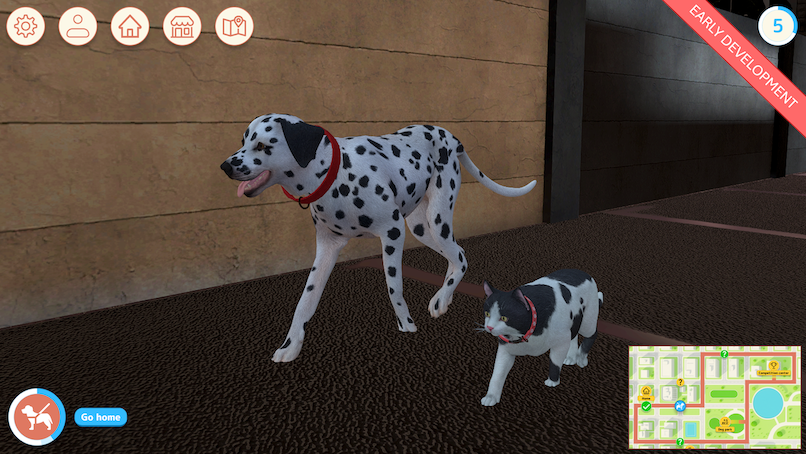
If you are searching for games like Nintendogs on mobile, you are probably chasing a very specific feeling: low-stress care, strong pet bonding, and a routine that still feels meaningful after the first week. That is different from simply wanting another pet app. In this guide, we will break down what players usually mean when they want a modern Nintendogs-like experience, how to compare alternatives honestly, and where PawFriends fits without overpromising.
Table of Contents
What Players Usually Mean by "Games Like Nintendogs"
Most players are not asking for a one-to-one remake. They are asking for a game that gives the same emotional rhythm: regular check-ins, visible pet response, and the sense that your actions matter over time. That emotional loop is why this search intent still performs strongly years later.
There is also a comfort factor. Pet games often become part of a daily routine in the same way people check a journal or a weather app. The right game makes that routine feel calming, not demanding. If a game is too noisy, too grindy, or too transaction-driven, it misses the core reason people came in through this keyword.
What Made Classic Pet Games Work
Classic pet sims worked because they were clear. You could feed, groom, train, and interact without friction. The systems were understandable, but still had enough variation to feel alive. A pet that reacts differently over time creates attachment in a way that purely cosmetic systems cannot.
Another key factor was pacing. You were rarely punished for playing in short bursts. That made the game easy to keep in your life. Modern alternatives need to preserve that softness while adding enough long-term structure for current player expectations.
Quick Check
- Does daily care still feel good after a week?
- Do pets feel distinct, not just skinned variants?
- Can short sessions move progress forward?
- Is progression understandable without external guides?
What Changed on Mobile
Mobile introduced two big constraints: fragmented attention and variable session length. Players may have six minutes one day and forty minutes the next. A good mobile pet game supports both without making one mode feel pointless.
That is where many alternatives fail. Some are great in long sessions but empty in short sessions. Others are quick but shallow. The strongest mobile pet games make short routines meaningful and long sessions rewarding, with no hard dependency on either style.
How to Evaluate Modern Alternatives
If you want a practical method, run a one-week trial and score each game on four things: care loop quality, emotional feedback, session flexibility, and progression clarity. Ignore launch hype and compare how each game feels on real days when your schedule is messy.
You should also check whether systems connect. In good designs, care links to exploration, exploration links to customization, and training links to meaningful goals. If every system feels isolated, retention usually drops quickly even if the first hour feels polished.
Guiding Principle
The best alternative is not the one that looks most familiar at first glance. It is the one that still feels rewarding after routine repetition.
Where PawFriends Fits
PawFriends is best framed as a modern cozy companion game inspired by what players loved in older pet sims. From the current public messaging, the notable strengths are dogs and cats in one world, walk and discovery loops, optional competitions, and social systems through Paw Clubs.
The important part is expectation-setting. It is safer and more useful to position PawFriends as a modern evolution of the companion fantasy, not as a direct replica. That protects trust and helps players evaluate fit based on real design priorities instead of nostalgia alone.
If your priority is species variety, see Dog and Cat Game. If your priority is calmer pacing, see Cozy Mobile Pet Game. If your priority is broader framework, see Virtual Pet Game.
Common Mistakes When Comparing Pet Games
A frequent mistake is choosing based only on visual style. Art direction matters, but loop quality matters more for long-term enjoyment. Another mistake is deciding after one session. Pet games are retention genres; they should be judged over repeated routine use.
Players also underestimate friction. If core actions require too many taps or unclear menus, the routine breaks, even if the concept is good. Comfort in this genre is partly emotional and partly UX.
Practical Next Steps
Use this sequence: test two alternatives for one week each, log three notes per session (what felt good, what felt unclear, what you wanted next), and compare results at the end. This avoids impulse installs and gives you a better match for your real play style.
Then continue with What Makes a Great Virtual Pet Game? and The Best Cozy Pet Games for Animal Lovers for deeper comparison criteria.
Follow the PawFriends Journey
Join the newsletter for devlog updates, Kickstarter milestones, and important progress notes.
Join newsletter updatesFrequently Asked Questions
Is PawFriends officially connected to Nintendogs?
No. PawFriends is not officially associated with Nintendo or Nintendogs. It is an independent cozy pet game.
What should I prioritize when comparing alternatives?
Care loop quality, session flexibility, and progression clarity are the most useful first checks.
Can short mobile sessions still feel meaningful?
Yes. Strong mobile pet design ensures short sessions still improve bonding or progression.
How long should I test before deciding?
A structured one-week trial is usually enough to identify whether the routine actually fits your life.