
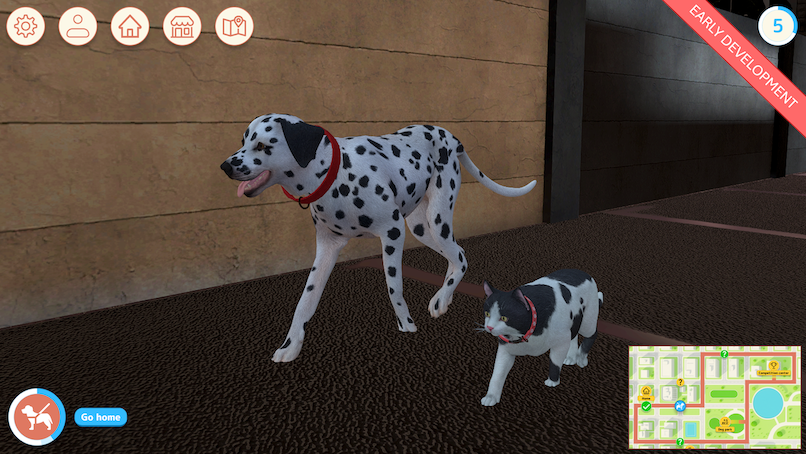
Walk systems are where a cozy pet game either becomes memorable or starts to feel repetitive. In PawFriends, walks, discoveries, and hidden gifts are positioned as a core loop that connects daily care to long-term progression. This article unpacks how that loop works, what makes exploration satisfying over time, and how players can use walk sessions more intentionally without turning a cozy routine into optimization pressure.
Table of Contents
Why Walks Matter in Pet Sims
Walks are not only visual variety. They are a context system. They make your pet feel like part of a world instead of only part of an interface. That world context increases attachment and improves routine retention.
In practical terms, walk loops are one of the easiest ways to keep daily sessions fresh without forcing heavy complexity.
Route Agency and Session Tone
Even small route choices change how a session feels. Some routes are better for quick consistency play. Others are better for discovery-focused sessions. That flexibility helps players match gameplay to real-life energy.
Agency also increases ownership. Players stay longer when they can shape outcomes instead of following one rigid script every day.
Walk Design Check
- Can short walks still feel meaningful?
- Do route choices affect outcomes?
- Is exploration clear without being linear?
- Do discoveries connect to long-term goals?
Discovery Pacing That Feels Good
Discovery systems fail when rewards are either pure randomness or pure predictability. Good pacing gives players enough consistency to plan and enough surprise to stay curious.
This balance is important in cozy games because progress should feel gentle but not stale. Curiosity is a retention tool when used carefully.
Hidden Gifts and Real Utility
Hidden gifts matter most when they support other systems like customization or progression preparation. If rewards are disconnected from broader play, they quickly become background noise.
The strongest reward loops make discoveries feel like part of your companion story, not just inventory growth.
Guiding Principle
Exploration is strongest when rewards have both immediate delight and long-term use.
How Walks Connect to Other Systems
Great loop design is connective. Walks should feed training confidence, customization identity, and event readiness. This makes routine sessions feel relevant even when they are short.
When systems reinforce each other, players experience momentum instead of fragmentation.
A Sustainable Weekly Rhythm
A practical schedule is simple: quick consistency walks on busy days, one deeper discovery session on open days, and one flexible route experiment each week. This balances comfort and novelty.
Most burnout in cozy genres comes from over-optimization, not from lack of effort. Rhythmic play is usually the healthier strategy.
What to Track as a Player
You do not need complex analytics. A few notes are enough: which routes feel best, which discoveries help progression, and which sessions felt most satisfying. That gives you actionable clarity quickly.
For related systems, continue with Agility, Obedience, and Disc Competitions and Cozy Mobile Pet Game.
Follow the PawFriends Journey
Join the newsletter for devlog updates, Kickstarter milestones, and important progress notes.
Join newsletter updatesFrequently Asked Questions
Are walks mainly for collecting items?
No. They also support world immersion, bonding rhythm, and progression pacing.
How often should I focus on walk sessions?
Frequent short walks plus occasional deeper exploration is usually the most sustainable pattern.
Do hidden gifts matter after early game?
Yes, especially when rewards connect to customization and progression systems.
Can exploration stay cozy while still goal-driven?
Yes. The key is meaningful reward pacing without pressure-heavy session requirements.